Originally published as “Ο ασκητής της Silicon Valley” in Ta Nea
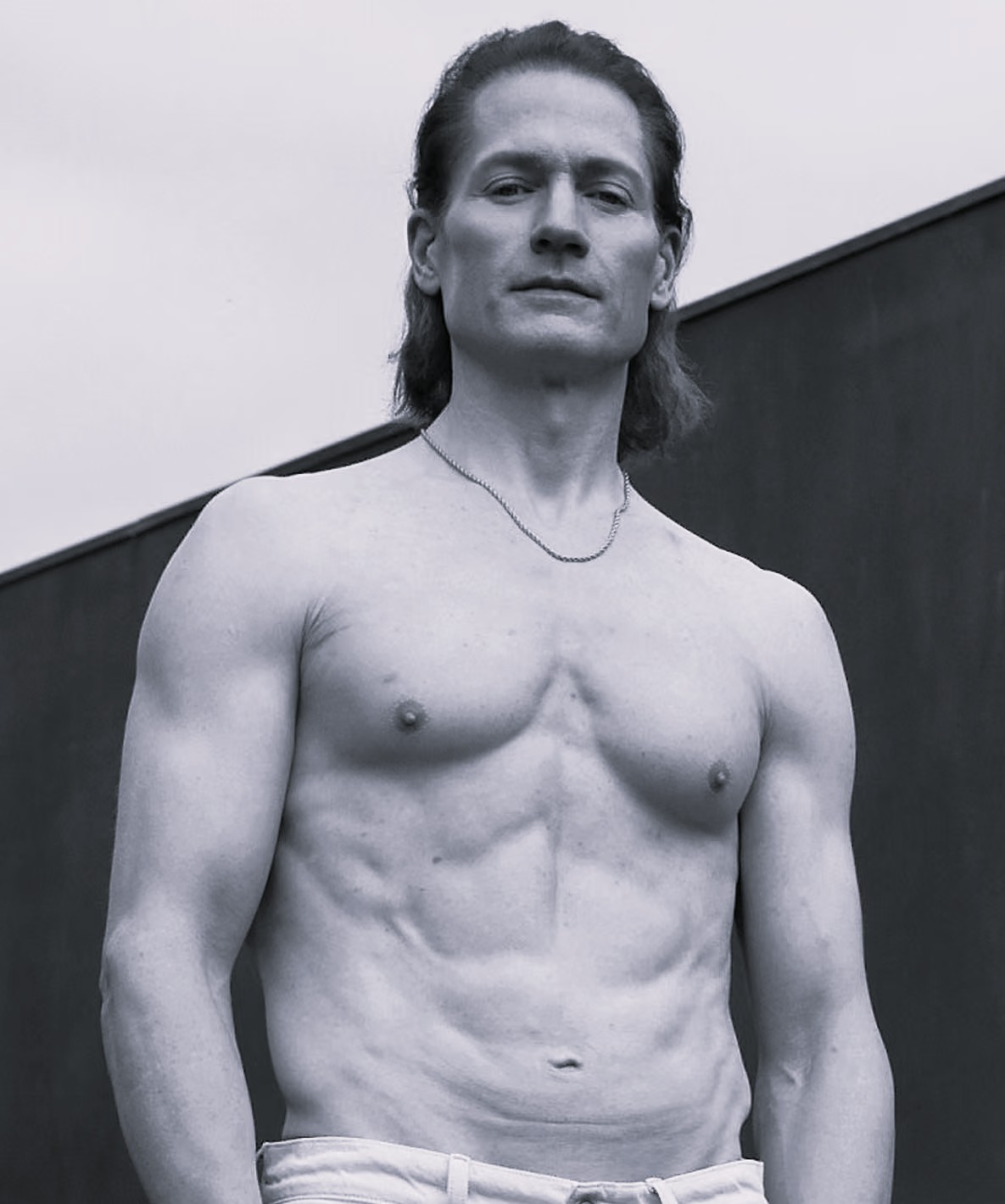
A few days ago, international media reported that Bryan Johnson had been diagnosed with autoimmune gastritis. “My stomach is eating itself,” he said, describing a condition in which the immune system attacks cells in the lining of the stomach. The news prompted a wave of mocking comments on social media. Johnson is no ordinary patient—not even an ordinary multimillionaire. He is the man who, in recent years, has organised his entire daily life around a single purpose: not to grow old, not to die.
He is not, of course, the only tech oligarch who regards ageing as a problem to be solved. Jeff Bezos has been linked to investments in Altos Labs, a company researching cellular reprogramming, as well as in Unity Biotechnology, which is exploring ways of targeting senescent cells. Peter Thiel has also invested in longevity companies and spoken publicly of his desire to extend his life with the help of technology. Sam Altman has backed Retro Biosciences, a company that promises longevity. Mark Zuckerberg, for his part, has funded large-scale biomedical initiatives and major prizes in the life sciences.
The difference between Johnson and the other tech oligarchs is obvious. He does not confine himself to funding research programmes that may, in the medium or long term, extend the human lifespan. He has turned his own body into a laboratory and himself into a test subject. His entire daily life is subordinated to the goal of not dying: he goes to bed at 8.30 every evening in a specially designed room, follows a precise ritual of physical exercise, has received a plasma infusion from his teenage son, adheres to a strict dietary routine, takes dozens of supplements, abstains from sugar, processed foods and alcohol, avoids sunlight, and subjects his body to constant testing. Around him is a team of doctors and specialists who monitor, measure and assess his health.
This entire routine, which costs around two million dollars a year, was documented in a Netflix documentary. Personally, I found it disturbing and could not bring myself to watch it to the end. Yet it is difficult to watch without asking what value there is in a life at once so luxurious and so deprived. A life in which the body is treated as hardware requiring constant maintenance and supervision; in which love and joy become variables affecting cortisol, testosterone and inflammation. Even his son, in the most unsettling scene of the whole undertaking, is transformed into a reservoir of youthful biological material.
The idea that death stands opposed to life, rather than being an integral part of it, and must therefore somehow be defeated, was not, of course, invented by Johnson or the other tech oligarchs. Nor is there anything new in the belief that a particular way of life, a strict routine, can bring about such a transcendence. Seen from another angle, then, Bryan Johnson bears a strange resemblance to an ascetic. Like the ascetics of Late Antiquity—and ascetics of later periods too—he has organised his daily life around a strict rule. He controls his food, his sleep, his movement, his body’s exposure to the world. He deprives himself, repeats, disciplines, watches over himself. His life has been turned into software that must run with absolute precision.
The resemblance is more than superficial. The late antique ascetic was, of course, indifferent to pleasure; he often regarded it with contempt. More importantly, he treated the body as an arena of constant struggle. Food, sleep, sexual desire, comfort and sociability could all become avenues through which the passions enslaved the human being. Ultimately, ascetic practice was a technology of the self: through fasting, vigils, continence, prayer, silence, isolation or obedience, the ascetic sought to fashion a different self. Johnson’s routine has a paradoxical affinity with this world. In place of the passions, there are inflammation, hormones, biomarkers and biological age. The medical team takes the place of the spiritual father. Instead of a monastic rule, there is a protocol.
But this is also where the crucial difference emerges. The ascetic did not simply want to live longer. Mere longevity would probably have meant little to him. His practice rested on the conviction that this present life is not the only life we have. Self-denial had meaning because it opened the human being to something beyond the self: to God, salvation, eternal life. Johnson thus resembles an ascetic without eschatology. He has a rule, self-restraint, discipline, daily repetition, even a performative dimension. Yet none of this leads beyond the self. It returns continually to his body: to its measurement, its maintenance, the prolongation of its functioning. The monk was indifferent to biological life in the name of eternal life. Johnson turns biological life into an absolute because he recognises no other.
Neither the mockery nor his illness has discouraged Johnson. He has declared that he will continue his undertaking. And yet autoimmune gastritis reveals the limits of the fantasy that the body can be made entirely legible, entirely measurable, entirely programmable. The world may have been disenchanted; the prospect of another life and the hope of transcending death may have been pushed to the margins. Yet however hard we try to turn the body into hardware, it remains a body: opaque, unpredictable, historical, vulnerable, mortal. Human.